



Best Ergonomic Chair for Long Hours: What Works
Table of Contents
- What Makes an Ergonomic Chair Work for Long Hours
- Best Office Chair for Back Pain: What to Look For
- Office Chair for 12-Hour Shifts: Durability and Comfort
- Mesh vs. Cushioned Office Chair: Which Is Better for All-Day Sitting?
- How to Adjust an Ergonomic Office Chair for Your Body
- Micro-Movement, Active Sitting, and Standing Desk Compatibility
- Assembly, Maintenance, and Long-Term Longevity
- Conclusion: Choosing the Right Chair for Your Body
- Frequently Asked Questions
Last Updated: October 12, 2026
What Makes an Ergonomic Chair Work for Long Hours
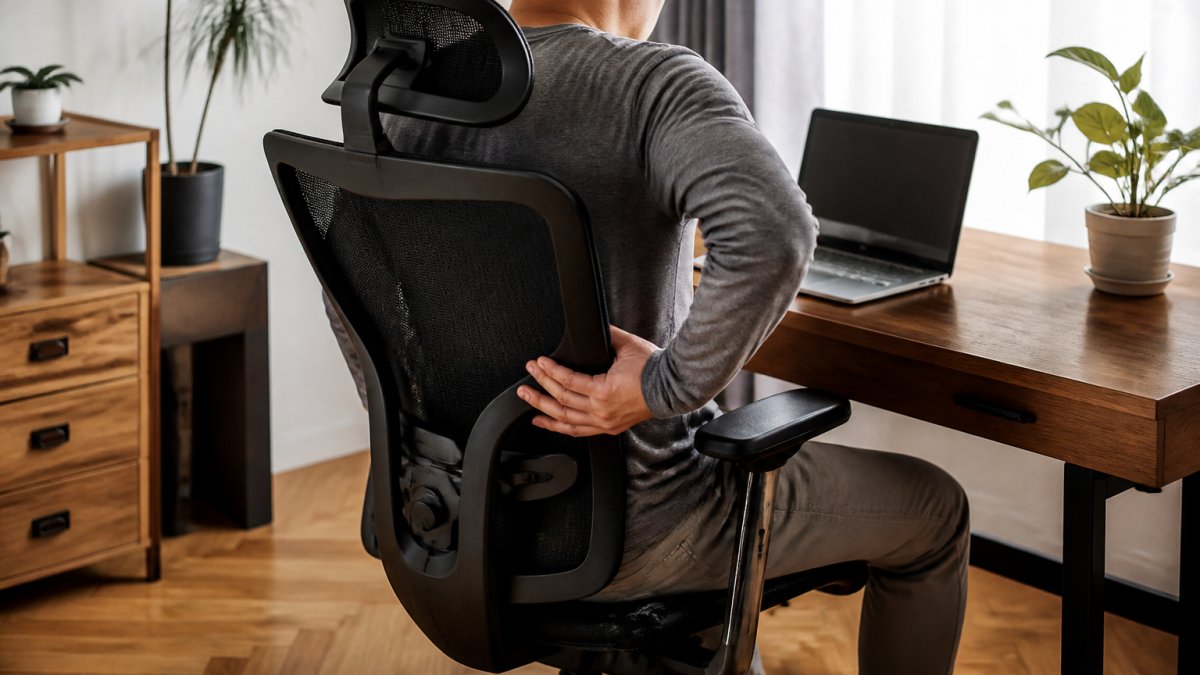
The best ergonomic chair for long hours keeps your spine in neutral alignment while letting you shift position freely.
A chair is not a cure, it either reduces the load on your body or adds to it, hour after hour.
The Features That Actually Reduce Pain
Most marketing noise around ergonomic chairs ignores a simple truth: adjustability matters more than any single feature. A chair that fits your body beats a pricier one that doesn't.
The features that consistently help:
- Adjustable lumbar support that moves up, down, and in or out
- Seat pan depth you can slide forward or back
- Tension control on the recline so the chair supports your weight
Best Office Chair for Back Pain: What to Look For
The best office chair for back pain prioritizes lumbar support and correct seat sizing over styling. When your lower back has support and your hips sit level, the muscles along your spine do less work. Two adjustments do most of the heavy lifting: lumbar support and seat dimensions.
Lumbar Support and Spinal Alignment
The lumbar support is the curve in the lower back of the chair that matches the inward curve of your spine. Set at the right height, it holds your lower back in its natural position instead of letting you slump. Too low and it pushes your pelvis forward; too high and it digs into your mid-back. The right spot is the small of your back, roughly level with your belt line.
Seat Depth, Width, and Pressure Distribution
Seat pan depth is the distance from the front edge of the seat to the backrest. When correct, you can sit all the way back against the lumbar support with two to three fingers of space behind your knees. Too deep and the front edge presses into your calves; too shallow and your thighs carry your weight instead of your seat.
Office Chair for 12-Hour Shifts: Durability and Comfort
An office chair for 12-hour shifts needs to hold up to constant use, not just feel good on day one. Long shifts expose weak points fast: the gas cylinder, the frame, the casters, and the seat foam. A chair built for eight hours may not survive twelve.
The Four Parts That Fail First
Gas cylinder (pneumatic lift). The single most common failure point.
Seat foam. Low-density foam compresses and flattens; on a 12-hour chair the seat is under load roughly half the day, every day.
Casters. They fail two ways: the wheel stops rolling (hair, dust, and grit wrap the axle) or the stem snaps at the base.
Frame and base. A five-point base with a wide spread keeps the chair stable when you lean or stand up.
Weight Capacity: Buy With Headroom, Not to the Limit
Check the stated weight capacity and buy with headroom. A steel or reinforced frame holds its shape under daily load far better than thin plastic. Near the top of a chair's weight range, the mechanism wears faster, the cylinder cycles harder, the foam compresses more, and the recline tension spring stays strained. A chair rated to 250 lbs often fails within two years for a 230-lb user, while the same chair lasts a decade for a 150-lb user.
How to Test a Chair Before You Commit
You can't cycle a cylinder 10,000 times in a showroom, but you can check the parts that predict longevity:
- Sit and stand ten times. Does the cylinder hold height, or drift down? Any sink is a warning.
- Lean back hard. Does the frame flex or creak? Rigid is good; flex means stress.
- Roll across the floor. Do the casters glide, or catch and stutter?
Maintenance That Extends a Chair's Life
A simple routine keeps a chair working for years:
- Check and tighten bolts every few months. A loose armrest or backrest mount stresses the frame and leads to cracks that cannot be repaired.
- Clean casters of hair and dust. Pull the caster, remove the wrap, and reinsert. This alone can add years to a caster set.
- Wipe mesh with a damp cloth, never soak it. Moisture in the weave frame promotes corrosion.
Mesh vs. Cushioned Office Chair: Which Is Better for All-Day Sitting?
The mesh vs. cushioned office chair decision comes down to climate, body type, and how long you sit. Breathable mesh keeps air moving, so you stay cooler during long sessions. Cushioned seats feel softer at first but trap heat and flatten over time. Neither is universally better, the right answer depends on how your body handles pressure and heat across a long day.
What Mesh Actually Does for Long-Hour Sitting
A mesh backrest is a woven suspension surface, usually a polymer weave stretched over a frame. Because air passes through the weave instead of pooling against your back, skin temperature stays lower and moisture evaporates faster, by hour six a foam backrest can feel clammy against a shirt.
The trade-off: cheap mesh is the worst of both worlds. A thin, tightly strung weave with no give creates pressure points along the shoulder blades and lower back, and can sag permanently within a year.
What Cushion Does Better
Foam and upholstered seats win on pressure distribution. A denser foam seat spreads your weight across a wider area, which is kinder to sensitive sit bones, people with limited natural padding, and anyone managing pain conditions where concentrated pressure is the enemy.
The catch is compression. Low-density foam, the kind in most budget chairs, loses roughly a third of its loft within a year of daily eight-hour use, and once it flattens, the seat pan edge and frame start pressing through.
The Hybrid Most Long-Hour Sitters End Up Choosing
A cushioned seat with a mesh back is the middle ground most people land on: pressure relief where your body weight rests, airflow where heat builds up. For anyone sitting six or more hours a day, this combination tends to outperform either a full mesh chair or a fully upholstered one.
Matching Material to Your Body and Room
- Runs warm, sweats easily, sits 8+ hours: mesh back, and consider a mesh seat if you don't have sensitive sit bones.
- Sensitive sit bones, recent surgery, or low natural padding: high-density foam seat, mesh back.
- Cold office or home in winter: upholstered back and seat, accepting the warmer sit.
| Factor | Mesh Back | Cushioned Back | Hybrid (Foam Seat + Mesh Back) |
|---|---|---|---|
| Airflow | High | Low | Medium-high |
| Pressure relief | Moderate | High | High at seat, moderate at back |
| Long-term shape | Holds if quality weave | Flattens if low-density foam | Holds if high-density foam |
| Break-in feel | Consistent from day one | Softens over weeks | Firm at first, then settles |
| Best for | Warm rooms, long days, hot sleepers | Cold rooms, sensitive sit bones | Most long-hour sitters |
OSHA computer workstation eTool guidance on seating
How to Adjust an Ergonomic Office Chair for Your Body
Learning how to adjust an ergonomic office chair takes about five minutes and changes everything. A well-built chair set up wrong performs worse than a basic chair set up right. Work through the steps in order.
Step-by-Step Adjustment Checklist
- Set seat height so your feet rest flat and knees sit near hip level
- Slide the seat pan so you have two to three fingers behind your knees
- Raise or lower the lumbar support to the small of your back
Micro-Movement, Active Sitting, and Standing Desk Compatibility
Micro-movement and active sitting are the parts most chair guides skip. Your body is not designed to hold one position for hours, even a good one. Small, constant shifts keep blood moving and take pressure off any single spot.
Standing desk compatibility matters too. If you alternate between sitting and standing, you want a chair that rolls easily and tucks away cleanly.
Assembly, Maintenance, and Long-Term Longevity
Assembly and maintenance decide how long a chair actually lasts. Most chairs ship partly assembled and take 20 to 40 minutes to finish. Tighten every bolt firmly, but do not overtighten, or you can crack the mounting points. Then keep up a simple routine: check and tighten bolts every few months, clean casters of hair and dust, wipe mesh with a damp cloth (never soak it), and keep the gas cylinder free of grit.
Conclusion: Choosing the Right Chair for Your Body
The right chair is the one that fits your body, not the one with the best reviews. Focus on adjustability, seat sizing, and durability over brand names. If you live with chronic pain or are recovering from surgery, that fit matters even more.
At Sleek Space Mod, we curate ergonomic furniture built for bodies that need more, with shipping included on every order and a hero discount for nurses, military, first responders, and teachers.
Frequently Asked Questions
Which chair is best for long sitting hours?
The best ergonomic chair for long hours has adjustable lumbar support, a seat depth that lets your back touch the backrest, and a synchro-tilt or dynamic recline mechanism. Look for breathable mesh or high-density foam, 4D armrests, and a waterfall seat edge to reduce pressure on your thighs. Adjustable height and tension control let you shift positions throughout the day, which matters more than any single feature.
Are ergonomic chairs good for back pain?
Yes, when they fit your body. A chair with proper lumbar support and seat pan depth keeps your spine in neutral alignment, reducing strain on the lower back. For chronic conditions like fibromyalgia or after spinal surgery, the key is adjustability: you need to change the lumbar height, seat depth, and recline angle to match your specific needs. A chair that cannot be adjusted to your body will not help, no matter how ergonomic it claims to be.
Is a mesh or cushioned chair better for sitting all day?
Mesh backrests offer better airflow and breathability, which helps if you tend to overheat or have temperature sensitivity. Cushioned seats provide more pressure relief for people with bony prominences or who need extra softness. Many ergonomic chairs combine both: a mesh back with a foam seat. The right choice depends on your body and climate. If you sit for 12-hour shifts, prioritize a seat cushion with high-density foam that won't flatten, and a breathable back to reduce sweating.
How often should I take breaks from sitting in an office chair?
Stand up and move at least every 30 to 60 minutes. Even the best ergonomic chair for long hours cannot undo the effects of uninterrupted sitting. Set a timer to stretch, walk to refill water, or do a few standing exercises. If you have a standing desk, alternate between sitting and standing every 30 minutes. Micro-movements like shifting your weight or rocking in a dynamic chair also help keep your muscles active and reduce stiffness.
Finding a chair that supports you through a twelve-hour day is harder when your body has specific needs. Sleek Space Mod offers a curated selection of ergonomic furniture designed for bodies that need more, with shipping included on every order and a hero discount for nurses, military, first responders, and teachers. Get started with Sleek Space Mod and build a workspace that supports your comfort and recovery.
